The difference between a PAL and an RPAL comes down to one word: handguns. A PAL (Possession and Acquisition Licence) covers non-restricted firearms - most rifles and shotguns. An RPAL adds restricted firearms, which means most handguns and a handful of specific rifle types. Getting the RPAL requires one extra course, the CRFSC, on top of the CFSC everyone takes.
If you’re deciding which to get before booking a course, this comparison covers what actually differs - including the handgun freeze, which changed the math for many buyers.
Side-by-side comparison
| PAL | RPAL | |
|---|---|---|
| Firearms covered | Non-restricted (most rifles, shotguns) | Non-restricted plus restricted (most handguns, some rifles) |
| Courses required | CFSC | CFSC + CRFSC |
| Typical training time | 1 day | 2 days (often one weekend) |
| Licence fee | Standard fee | Higher fee (both set by regulation - check the current amounts with the RCMP) |
| Registration | None for non-restricted (Quebec has its own long-gun registry) | Every restricted firearm is registered to you at your address |
| Transport | Unloaded; general safe-transport rules | Unloaded, locked, in a locked opaque case, only to authorized destinations |
| Storage | Locked or inoperable, ammunition not readily accessible | Stricter: locking device and locked container, or a safe/vault |
The minimum age (18), the background check, the 28-day first-licence waiting period, and the five-year validity are identical for both.
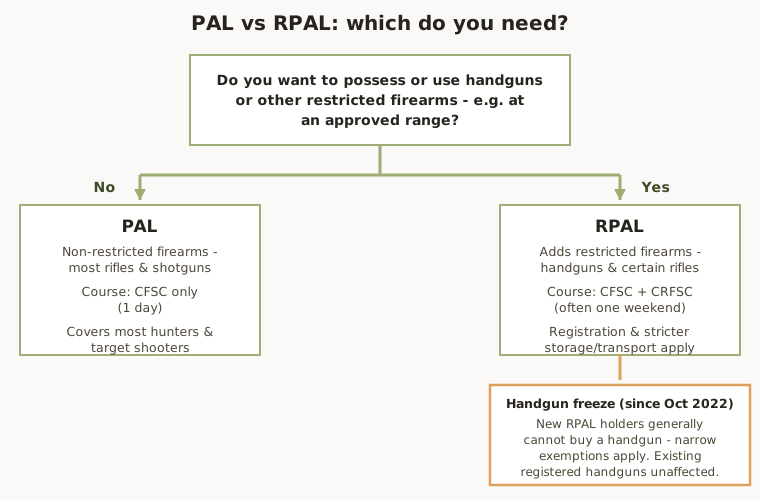 *Start with what you'll actually use: most first-time applicants only need the PAL.*
What “restricted” actually includes
Restricted firearms are mainly:
- handguns that aren’t prohibited (very short barrels and certain calibres are prohibited);
- centre-fire semi-automatic rifles with barrels under 470 mm;
- rifles that fold or telescope below 660 mm overall.
Everything else that’s legal falls under non-restricted - which is why a PAL alone serves most hunters and target shooters. The full breakdown, including the prohibited class, is in Firearm classes in Canada.
The handgun freeze changes the calculation
Since October 21, 2022, a national freeze has stopped individuals from buying, selling, importing, or transferring handguns, apart from narrow exemptions (certain competitive shooters, for example). The freeze remains in force as of this writing - verify the current status with the RCMP Canadian Firearms Program before booking a combined course.
Practically, that means a new RPAL holder today generally cannot buy a handgun. The RPAL still matters if you:
- expect to inherit or already possess registered handguns;
- want restricted-class rifles that aren’t handguns;
- shoot at a club where borrowing restricted firearms under supervision is part of the sport;
- want the credential ready in case the rules change.
If none of those apply, the PAL alone covers you, and you can add restricted privileges later without redoing anything.
Cost difference in practice
Expect a combined CFSC + CRFSC weekend to cost roughly 60–90% more than the CFSC alone, plus the higher licence fee. Typical course pricing by province, and what “exam fees included” should mean, are in What does the CFSC cost?
Our take for first-time applicants
Start with what you’ll actually use in the next year. Hunters and most new target shooters: take the CFSC, get the PAL, and upgrade later if a real need appears - your CFSC course report never expires. Booking both courses as one weekend only makes sense if you already know restricted firearms are in your near future, freeze notwithstanding.
Either way, the first step is identical: find a CFO-designated course near you and check whether the provider offers the CFSC alone, the combined weekend, or both.
Questions people ask
Can I upgrade from PAL to RPAL later?
Yes. Take the CRFSC whenever you like, then apply to add restricted privileges to your licence. Your CFSC course report never expires, so there is no penalty for starting with the PAL alone.
Is the RPAL harder to get than the PAL?
The process is the same with one extra course and test, a higher licence fee, and the same background check. The bigger differences come after: restricted firearms bring registration, stricter storage, and transport authorizations.
Does an RPAL let me carry a handgun?
No. An RPAL lets you possess restricted firearms and transport them, locked and unloaded, to authorized places such as an approved range. Carrying a handgun for protection is not part of any standard Canadian licence.
Can I buy a handgun with an RPAL right now?
Generally no. The national handgun freeze in force since October 2022 stops individuals from buying, selling, or transferring handguns, with narrow exemptions. An RPAL still covers other restricted firearms and lets you keep handguns already registered to you.